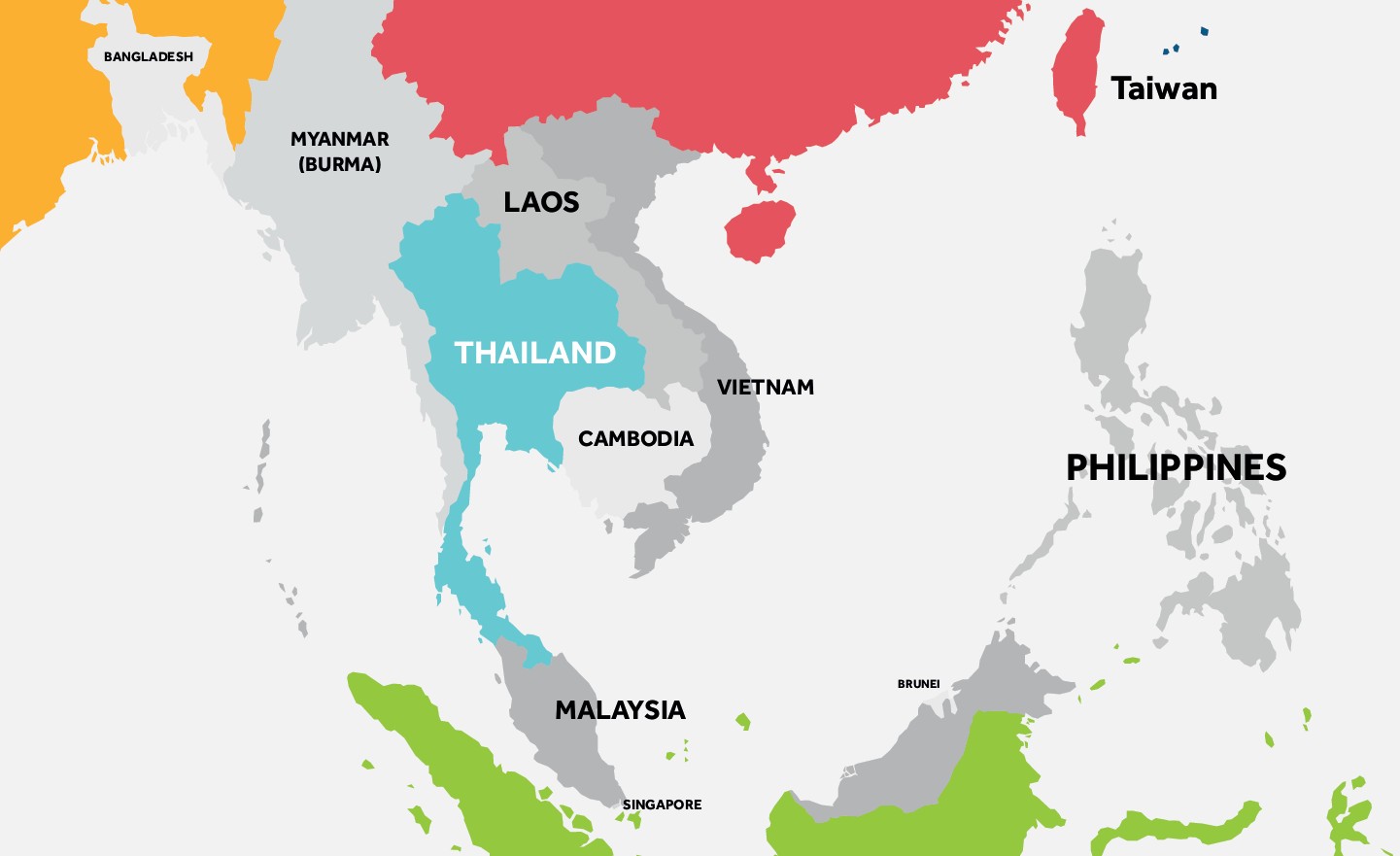
In depth: “The Asian bicycle production map is being redrawn”
What actually decides where the next factory is built? Werner Müller-Schell examines the topic…
In February 2012, Renault opened a car plant in Melloussa, a small town and rural commune near the Moroccan port city of Tangier. The remarkable
part was not the factory opening itself but the address. Neither Melloussa nor the free-trade zone around it, 30 kilometres inland from the Strait of Gibraltar, had any history with the automotive industry. Neither, for that matter, did Morocco. What the country offered instead was a deep-water port 14 kilo metres from the European coast, duty free access to the EU market and a government prepared to build vocational colleges for an industry that did not
yet exist. What happened next is an economic success story: today, the plant employs more than 6,000 people, and in 2023 Morocco passed China and Japan to become the European Union’s largest supplier of vehicles and automotive parts by value, at €15.1bn. None of this, of course, has anything to do with bicycles. But that is precisely why it is worth the detour.
Looking at the current map of Asian bicycle production, the same development is underway, only faster and with frames instead of cars. China and Taiwan still dominate. Eurostat counted 422,000 e-bikes entering the EU in the first half of 2026, with the two supplying 64%. But other countries with a less
prominent footprint on the bicycle production map are catching up.
Cambodia accounted for 12% of the volume, Vietnam for 11%. In short: suppliers that were marginal ten years ago are now competing for orders Taiwan and China used to take for granted. “We are at the point where China and Taiwan are becoming too expensive and people are looking for alternatives,” confirms Laurens van Rooijen, a Switzerland-based journalist and expert when it comes to bicycle production in Asia. “That is why new production locations keep appearing,” he continues.
What Investors Look For
None of this is new. Already in the 1970s, Japanese manufacturers began pricing themselves out of their home market and shifted investment to Taiwan instead. Alongside state support, export-processing zones and a strong entrepreneurial spirit, this influx of Japanese capital and know-how was one of the reasons Taiwan’s bicycle industry grew to the scale it eventually did. In the late 1990s, Taiwanese money followed the same logic into China.
Three variables drove both moves. “What investors look for is a large pool of workers, low wages, and the availability of plots to build factories,” van Rooijen explains. All three are now in short supply where the industry currently sits. Taiwan and China are ageing, wages keep rising, and other sectors bid for the same workers.
“Anything in tech promises better career prospects and better pay,” he notes. “Both China and Taiwan, with their highly developed electronics industries, are heavily affected by this development.”
Workers and land, however, only get a country onto the shortlist. The rest of the checklist has little to do with the factory floor itself. “As little administrative restriction and bureaucracy as possible are also important, as well as security for the investment. Political stability matters,” van Rooijen continues, before turning to the conditions that decide whether the goods can be sold at all: tariffs and trade barriers. On both counts, China has become complicated, facing EU anti-dumping measures and an increasingly unpredictable US regime. Also critical: long term stability, as a modern assembly
plant is a nine-figure commitment: Giant’s new facility in Vietnam’s Bình Dương, for example, carries a price tag of around USD 120m, and a site of that
size has to keep running through what ever the market does in the meantime.
“Putting up a factory means it has to run for twenty years before it amortises. That is not a decision you take lightly,” van Rooijen stresses.
The Map as it Stands
Bình Dương is arguably the most prominent example of how new production hubs are emerging in South-East Asia. Vietnam has attracted the region’s
largest bicycle investments over the past decade, and what unlocked the country was regulatory rather than industrial. The free trade agreement between the EU and Vietnam removed the duty on bicycles, but tied the exemption to rules of origin: manufacturers have to reach 50% regional value content, and the frame itself has to be built in Vietnam. Assembly alone does not qualify. “Vietnam dragged on for a long time until it really had free trade conditions with the EU,” van Rooijen recalls. “That was the point at which Giant decided to go in. And once one goes, they all go.” Not all of them went to the same place. “The Chinese companies invest too, but mainly in the north, around Hanoi, while the Taiwanese tend towards Ho Chi Minh,” he observes.
Vietnam’s share of EU e-bike imports has nonetheless halved since 2023, from 22% to 11%, and the Cambodian figures suggest where some of that volume went. Bicycle exports from Cambodia reached USD 609.33m in 2025, 42.7% more than the year before, according to the Ministry of Commerce.
Five assembly plants produce that volume, and all of them sit in the special economic zones around Bavet, directly on the Vietnamese border. Cambodia
has a young workforce, low wages and duty-free EU access under the European trade initiative Everything But Arms. Measured against the criteria that
decide these things, Cambodia ticks almost every box: workers, land, wages and market access.
Meanwhile, the rest of the field is filling up. Bangladesh has built its position almost entirely with domestic capital. Exports rose 28.3% to USD 138.75m
between July and May of fiscal 2025-26, according to the Export Promotion Bureau, with the conglomerate Meghna behind roughly two-thirds of the national total a year earlier. At Meghna’s Alpha Carbon plant in Gazipur, workers hand lay carbon frames that leave the country at around USD 200 apiece, against USD 20 for a steel frame, which suggests the ambition runs beyond cheap assembly work. Thailand has taken a narrower road, one built on its natural rubber deposits rather than on wage levels. Neither country is a production hub in the sense that China or Taiwan are, but both are considerably closer than they were ten years ago.
The Next Tier
Asked how the map will look in ten years, van Rooijen names three countries plus Vietnam on the list. India, Indonesia and Malaysia, he expects, will
have moved up, and his reasoning has less to do with wage levels than with sheer size. “They have a very young and large population, and also a large
domestic market. That is an advantage over other countries in the region,” he says. India shows what that looks like in practice: the Ludhiana cluster in Punjab turns out more than 60,000 bicycles a day and accounts for around three quarters of national production, yet only 5 to 7% of that output ever reaches a foreign market. “The Indians know how to produce in real volume, but there is still a learning process involved,” van Rooijen observes. “They clearly want to upgrade, because they advertise it actively: we have good tariffs, we have good customs conditions.”
Not every country on today’s growth list will still be on it in ten years, and van Rooijen is blunt about the ones he doubts. “A bit too unstable, both of them,” he says of Cambodia and Bangladesh, and his reservation has as much to do with infrastructure as with politics. “Reliable power supply and the rest of it, those are important pillars too.
If you run an aluminium smelter, the last thing you need is a power cut.” Brussels has added a constraint of its own: Regulation (EU) 2025/2146, adopted in October 2025, extended the anti-dumping duty on bicycles from China and kept it applied to consignments from Indonesia, Malaysia, Sri Lanka, Tunisia, Cambodia, Pakistan and the Philippines, whatever origin they declare.
All of which returns the question to the Moroccan port city of Tangier. Morocco did not win a car industry by being cheap, since plenty of countries are cheap. It won by supplying every thing that has to come with the cheapness: a port on Europe’s doorstep, duty-free access, a workforce trained at public expense, and enough predictability for a manufacturer to tie up capital for twenty years. Asia’s new production hubs have the first of those conditions in hand and are still working on the rest. One thing is certain: the map will be redrawn. Whether the value travels with it is likely to be decided in the upcoming years.