Dispelling the cycling regulation myths: Mandatory helmets, insurance and tax
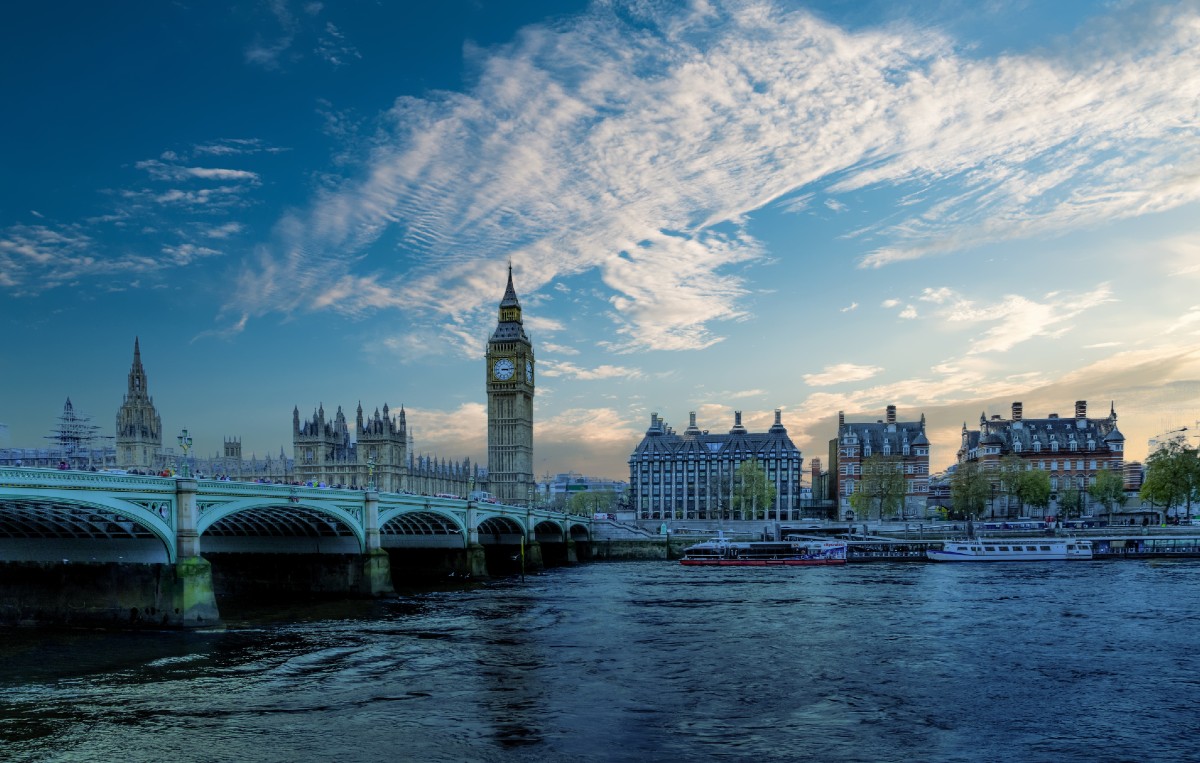
Lords (and Ladies) help us: It’s tedious work, but somebody has to keep an eye on them. Mark Sutton keeps an eye on the Houses of Parliament with a view to keeping cycling’s legal status as it is, dispelling all the arguments for regulating us more…
One of the very worst ways to spend a day on this planet is to tune in to the debates that take place in the House of Lords. Day after day, year after year, this unelected, uncapped Parliamentary chamber debates the issues of the day and while the secondary chamber can provide some checks and balances, mostly they just ask the same inane questions time and again, or at least they do when it comes to matters around cycling.
Against my better judgment and in the interests of trying to track political sentiment around cycling, I have had TheyWorkForYou alerts set up to my inbox for many years. This is something you can do, on any subject that interests you, to keep tabs on political discussion as it moves through the Houses of Parliament.
For this reason, I get almost weekly alerts about politicians tabling questions about why cyclists are not compelled to wear high visibility clothing; why they don’t have mandatory license plates and why the laws are not tougher against the less than one cyclist per year that may unfortunately cause a road death. Perhaps you have your own opinions on these subjects. So do the Lords and often they don’t come with much background research into the tabled questioning.
So, m’Lords, if I may help you with a few of the more common repetitively pitched questions, here’s some of the background research that presumably you could do in exchange for the again
expanded £371 day rate for turning up. Next time you see any of these debates pop up, feel free to point said politician in the direction of this article.
Mandatory registration and licensing plates for cyclists
This is one of the more commonly registered ideas that the Lords chew over, but it tends to come without much thought about the immense administrative cost that would come from regulating an activity that has no real costs to, nor adverse negative impact on society.
When the subject of a physical registration plate on bikes has been explored in more detail, it has been found that implementing a mandatory registration or licensing of cyclists would cost a similar amount to the same scheme for drivers. This at a time when successive Governments have been fond of trimming the size of the civil service. In March last year, Rachel Reeves suggested cutting around 10,000 administrative roles, for example.
So, where in the world has actually gone through with this idea, which, needless to say, would be a barrier to active travel, widely known for its net positive impact on the Treasury? Only North Korea. That’s it. Besides, where do you begin registering children who wish to cycle to school?
Helmet compulsion: How this mandate can make cycling more unsafe
It was in discussion with Cycling Industry News in the summer of 2020 that Eric Richter, then Giro’s Brand Development Manager, told us: “We do not design helmets specifically to reduce chances or severity of injury when impacts involve a car. The number of variables is too great to calculate – the speed of the car, the mass, the angle of impact, the rider, the surface, the speed of the rider, did the driver or rider swerve a little or hit the brakes before impact. All of these variables and more are unique in every instance, and there is no way to accurately predict what is going to happen or the forces involved.”
This was a fact that anyone with a basic understanding of physics could grasp. An EPS hat versus cars that are presently, on average, growing by 0.50cm in width every year and seemingly exponentially by weight will only have one result in a collision, so the way to look at this issue is to ask, where does the danger actually come from?
Helmets are designed only for typical falls from bicycles; these happen infrequently in isolation on tarmac surfaces. Despite this, nobody would actively discourage people from wearing a helmet if it makes them feel safer. There are, however, more head injuries inside cars than there are on bicycles, with motor vehicle crashes a leading cause. Food for thought when considering the perception and reality of danger.
According to the latest batch of Department for Transport casualty stats for cyclists: “The pedal cycle casualty rate has fallen for all severities in 2024 compared to 2004 on a per mile travelled basis. The overall casualty rate decreased by 36%. The fatality rate decreased by 55%.”
However, the largest cause of hospitalisation for cyclists is not isolated incidents where no other vehicle is involved. From 2020 to 2024, there were 3,336 casualties that were isolated cycling incidents, but add a car and the number jumps to 59,749. Add HGVs and you have a situation where they account for 5.8% of all fatalities, despite their vastly smaller numbers. The HGV industry, by the way, has repeatedly lobbied against safer cab design due to the associated costs.
The helmet compulsion argument is actually worse in the sense that where it has been deployed, cycling rates have plummeted, which in reality is probably far more dangerous for public health. After all, various studies have found that those who cycle as part of their lifestyle are 15% less likely to die from any and all causes as a result of the associated health and fitness benefits. For those who religiously cycle to work, one study found an all-cause mortality reduction of 41%.
Famously, the highest modal share cycling locations have hordes of cyclists not wearing helmets. This is largely as a result of dedicated and segregated cycling infrastructure being widely available and joined up, but it’s also down to a safety in numbers phenomenon, that conversely, makes helmet compulsion more dangerous for those who cycle. It has been found that where the number of cyclists reduced post-compulsion, incident rates with vehicles actually rose as cars were less likely to expect a cyclist.
Where helmet compulsion has actually been introduced it has been a disaster for cycling rates and thus public health. Australia has the most famous dataset on what actually happens. In New South Wales compulsion led to a 36% reduction in cycling rates and 42% among children. Very similar numbers were reflected in Melbourne and Perth.
Mandatory insurance for cyclists
Theoretically, insurance is designed to price in risk. As the aforementioned killed and seriously injured data illustrates, collisions with cyclists do tend to end only one way, even if it is the cyclist to blame and that is for the cyclist to come off far worse. Comparably, the damage a cyclist would cause to another vehicle is limited by the weight and speed of the rider, which it’s fair to say averages in the ballpark of 10 to 15mph in the city. Riders come in all shapes and sizes, but the average man weighs 95.7kg and woman 71.6kg. These metrics, by the laws of physics, cannot come close to matching the cost to the Treasury of the negative externalities of incidents on the roads related to heavier vehicles.

I ran the numbers based on some figures I could find on kinetic energy transfer and your typical male cyclist crashing at top speed has an energy transfer of 1,910 joules of energy. Since most cars sold in the UK are now SUVs, a two-tonne weight is not abnormal. Moving at the much-argued-over urban speed limit of 30mph, the same crash would generate 179,860 joules of energy. Interestingly, there is some thing of an exponential curve in damage transfer. At 40mph, a car would carry 319,760 joules and at 70mph, a massive 979,250 joules.
This is why cars have mandatory insurance and cyclists do not; because the damage risks are galaxies apart. Because insurance should price in risk, I dug up the actual cost of a road accident in the UK and the numbers further reinforce why it makes sense to make insurance mandatory for heavy and fast-moving vehicles. A fatal accident in 2012 money cost the best part of £2 million in lost output, human costs and medical and ambulance costs, excluding things like property damage and the repair of infrastructure. In 2024, there were 1,671 such incidents, or around five every day. Thankfully, in 2025, it was revealed that cycling fatalities fell to their lowest recorded level, with 82 people killed. 45% of those involved a collision with a car, with the most common cause given as “ineffective observation” followed by “aggression and dangerous driving”.
In playing devil’s advocate, this is worth the bike industry’s consideration as we push back against unregulated electric bikes. It is true to say that the same laws of physics would apply and that non-linear growth in energy transfer would be substantially higher on a 40mph e-motorbike versus the kinds of eBikes we are fighting to protect the status of.
Cycle lanes harm local businesses
Politicians love this presumption for some reason, that is, despite there being ample evidence that if you make places more people-friendly, they stay longer, visit more often and thus spend more in local businesses. Thankfully, a few places twigged during Covid that more outdoor seating and spaces for people to exist unworried about crossing a road actually meant communities gathered
more often. Happy, relaxed people spend more freely.
According to the Government’s own assessment – The economic benefits of walking and cycling – for every £1 spent on active travel the economy tends to benefit to the tune of £6. So the taxpayer should love cycling.
However, zoom in further to street level and the results can be even more impressive. Transport for London’s paper Walking and Cycling: The economic benefits found that where the capital has improved access to cycling, adjacent retail spend has risen by up to 30%. It also found that businesses that cater for cycling to work had better employee retention and were more attractive to potential staff.
Key to dispelling this tired old argument is the finding that cycle parking delivers a five-fold retail spend per square metre versus the same space used for car parking. Over the course of a month, people who used active travel means to arrive on the high street would spend up to 40% more than people who drove, according to a TfL finding. Cyclists would tend to make 12 visits each month to a driver’s eight; a full 50% more.
Cyclists don’t pay to use the roads, let’s tax them
Can you believe this one still comes up on the bingo card of sticks to beat cycling with? Aside from the ignorance of the fact that almost all cyclists drive at some stage too, this one is actually incredibly cheeky.
Going back to the science lesson about kinetic energy transfer and throwing in a little friction, the damage that cycling does to the roads is essentially non-existent versus vehicles weighing substantially more, so arguably those who choose to cycle instead of drive are actually subsidising the roads. That’s because the roads are generally paid for by council taxes, with a portion of this delegated to roads upkeep in any given area. Even fuel duty goes into the general taxation pot, so there is no argument that cars fund the roads.
The clue is in the name of the tax that far too many politicians still suggest cyclists need to pay. Vehicle excise duty is a tax on emissions, of which bicycles, horses and EV cars theoretically have next to none. EVs now, of course, do pay toward the road upkeep, but then again, these vehicles are coming in heavier than traditional cars and, as a result, are causing more damage to roads and pavements where they are often parked.
Did we miss any of other cycling myths that crop up in the corridors of power? Let us know in the usual places, including our Facebook group, Cycling Industry Chat.