
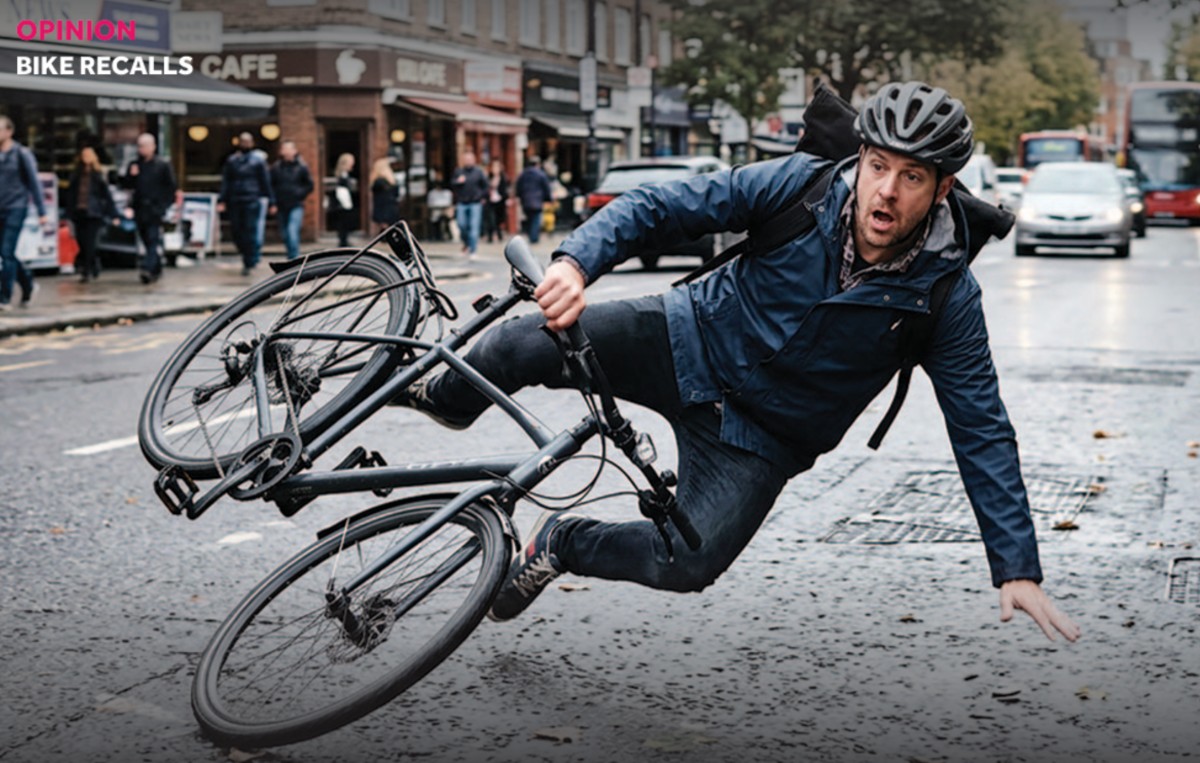
OPINION: Bike recalls are no longer rare and the response needs to change
Recalls are impossible to completely irradicate and indeed recently seem to be on the increase in the trade. How they are handled is crucial, argues Pete Gillett, CEO of Marketpoint Recall…
The cycling industry has seen a number of high profile recalls lately. It’s another reminder that product issues are no longer rare edge cases, but part of the landscape manufacturers and retailers now have to ride through. Each recall puts riders at risk, stretches dealer relationships and puts hard-won brand trust on the line. And while most businesses handle the engineering fix well, it is the human side of recalls that continues to skid out of control.
Different faults, same crash point
For anyone paying attention, this is becoming a familiar pattern. High profile brands like Specialized and Orbea have both had to act recently, adding to a growing list of recalls tracked across industry media. Frames, eBikes, components, batteries. Different products, different faults, but the same underlying challenge. Once a recall is announced, getting the message to riders and managing what happens next is far harder than fixing the bike itself.

The cycling sector is not alone here, but it is uniquely exposed. Bikes are not disposable consumer goods. They are expensive, personal and often deeply emotional purchases. Riders customise them, rely on them daily, build their identity around them and love them dearly. But more than that of course, if a bike fails when travelling at speed or down a mountain side, the risk to life is real.
Outdated recall playbooks are holding the industry back
Recent recalls have shown how fragile that experience can be. Riders unsure whether their bike is affected; Dealers fielding calls without clear answers; Manufacturers issuing updates across websites, PDFs and social posts, hoping the right people will see them. Too often, communication feels slow, fragmented and reactive. That is not a criticism of intent. It is a sign that the system itself is old fashioned.
People say that you cannot reinvent the wheel. But when it comes to recalls, that may be exactly what the cycling industry needs to do. The current approach was built for a simpler world, one where volumes were lower, supply chains were shorter and customer expectations were far less demanding. Today, recalls move at speed, online, across borders and channels. Trying to manage them with analogue tools is like riding a carbon race bike with rim brakes in a storm. So what needs to change?
First, be recall ready
It is clear that recalls are no longer unlikely events. They are a recurring operational reality for manufacturers and retailers alike. Being recall ready means accepting that fact and planning for it properly. That includes knowing what data you have, what you do not, and how quickly you can act when an issue arises. Brands that prepare in advance can respond calmly and clearly. Those that do not often end up scrambling, losing time when every hour matters.
Second, move on from analogue
Posters in stores, static PDFs and inbox flooding emails are blunt tools for a precise problem. Digital recall management allows manufacturers to track products, engage riders directly and see in real time who has responded and who has not. Done well, it reduces manual effort, cuts administration and shortens
recall timelines. With the right digital systems in place, including AI-supported triage and response handling, recall costs, time and admin can be cut by up to 40%. More importantly, it gives teams control instead of chaos.
Third, focus on rider reassurance
A recall is not just a logistics exercise. It is a moment of truth. Riders want to know that the brand takes their safety seriously and has a clear plan to put things right. Bikes are large, awkward to return and often essential to daily life. Asking someone to box up their pride and joy and wait weeks for updates is no longer acceptable. Clear communication, visible progress and simple processes are what rebuild trust. Silence and uncertainty do the opposite.
Control is what riders remember
None of this is about perfection. Recalls will still happen. Components will still fail. What matters is how the industry responds when they do. The brands that come out stronger are not the ones that never recall products, but the ones that handle recalls with confidence, clarity and respect for the rider.
The takeaway for manufacturers and retailers is simple. Recalls are not something to panic about, but they are not something to wing either. Put better brakes on your recall process now, before the next issue sends you downhill fast. Because in cycling, as on the road or trail, control is everything.




