
Taipei Cycle Show 2026 analysis: The system is shifting
The bicycle industry came to Taipei hoping for signs of recovery. What it found instead were the contours of a deeper shift – in supply chains, trade show loyalties and product standards alike. Werner Müller-Schell reports from Taiwan for Cycling Industry News…
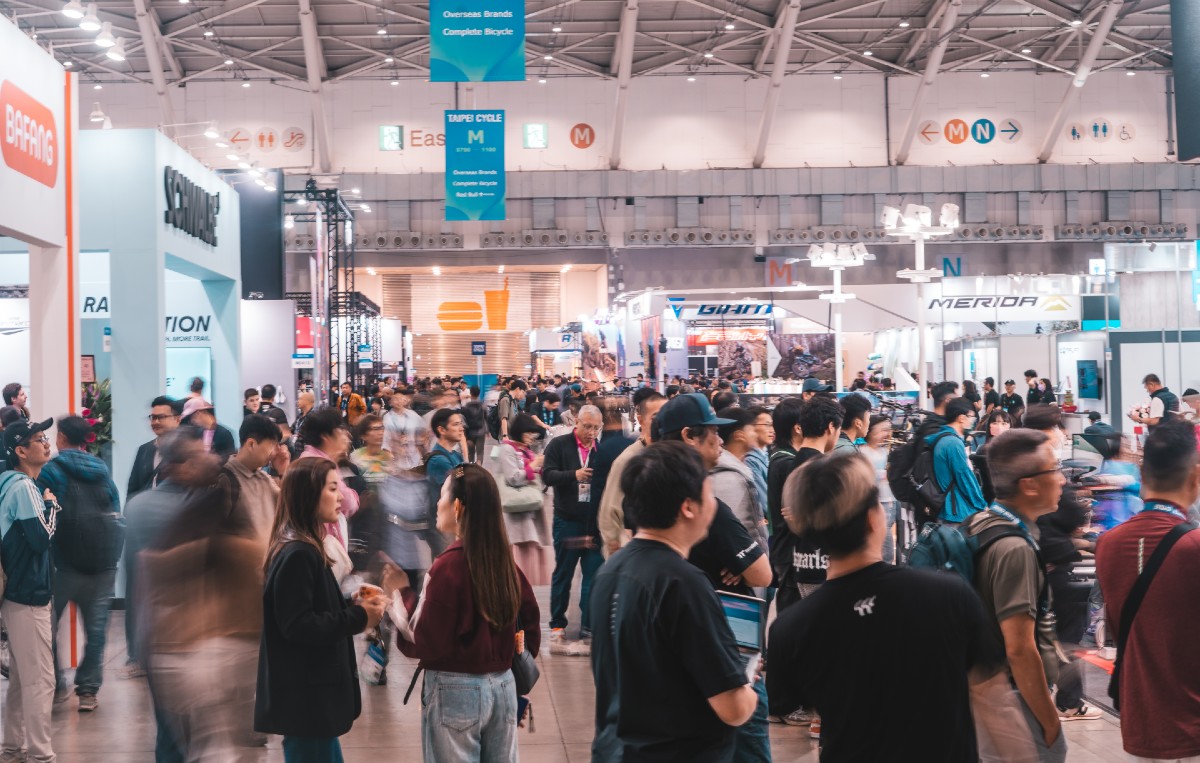
There is a moment, midway through any trade show, when the noise of the opening day has faded and the real conversations begin. At Taipei Cycle 2026, held over 25 to 28 March at the Nangang Exhibition Centre in Taiwan’s capital, that moment arrived early. The aisles were busy enough – more than 900 exhibitors filled 3,450 booths and the show’s official theme, “Cycling to Wellness,” nodded dutifully toward healthy lifestyles, AI-driven sports technology and ESG-led manufacturing. But behind the carefully arranged product displays and the polished booth graphics, a different conversation was taking place: not about when the recovery would arrive, but about whether the structures that once held the industry together were still fit for purpose.
The numbers offered little comfort to those hoping for a swift rebound. Traditionally, the latest market data from the Taiwan Bicycle Association (TBA) was communicated during the show. According to the TBA, Taiwanese manufacturers exported 335,750 eBikes in 2025, a decline of 7.7% compared with 2024. Conventional bicycle exports fell far more sharply, dropping 23.9% to 691,219 units, while the value of those shipments declined 27.8% to $742.9 million. The one bright spot was pricing: the average export price of eBikes rose 7.7% to $1,990 per unit, and parts exports climbed 4.5% in volume and 4.7% in value to $1.47 billion – underscoring the enduring strength of Taiwan’s supplier network even as finished-bike orders continued to weaken. Giant, Taiwan’s largest manufacturer, reported a 16.9% revenue decline in the first nine months of 2025, while Merida’s contraction was a more moderate 8.5%. The message was familiar: the pandemic boom is over, inventories are still working down and the new normal looks leaner and slower than anyone had hoped.
And yet, Taipei Cycle 2026 did not feel defeated. It felt recalibrated. International visitor numbers were visibly lower than in pre-pandemic years and several exhibitors noted that European and Latin American buyers had thinned out. But those who came were focused. Greg Grobler, CEO at component manufacturer BLKTEC, captured the prevailing tone: “We’ve had quite a few rough years after Covid, but hopefully, the next five years are going to look much better. Walking around the show, it’s clear there’s a lot of positivity and a strong focus on mobility.” Ken Li, Head of Global PR and Marketing at the Giant Group, echoed the sentiment: “We’re seeing a surge in people riding for commuting, exercise and recreation. The development of eBikes is making cycling more accessible to a wider audience.” For Giant, Taiwan’s home show therefore remains “like our home court — the best place to showcase new products and technologies to the world.”
Beneath the surface optimism, however, a structural shift was unmistakable. Syuan-Yo Lin, Marketing Manager at Taiwanese drive-unit specialist Hyena E-Bike Systems, put it
bluntly in a widely shared post-show reflection: “This is not just a slow recovery. The system that used to hold the industry together is no longer working the same way.” Lin pointed to a telling behavioural change among international buyers: instead of attending both Taipei Cycle and China Cycle in Shanghai, many are now choosing one or the other — and, under budget pressure, increasingly opting for China. “It is no longer just about capacity,” he said. “China now offers increasingly complete solutions, from components to electronics to commercial execution, all under strong pricing pressure.” At the same time, he observed, the industry has settled into what he called a “no commitment” mode — fewer joint development projects, shorter planning horizons and a default stance of “no purchase order, no development.” Individually rational, he argued, but collectively limiting.
The discussion around the growing importance of China Cycle was symbolic for another recurring topic on the floor: the future of bicycle trade shows. The once undisputed position of Eurobike is increasingly questioned and Taipei Cycle 2026 added fresh fuel to a debate that had already been stoked by the successful editions of Velofollies in Belgium and Cyclingworld in Düsseldorf in the weeks before. Many of the people we spoke to noted that many companies were simply not planning to attend Eurobike — and those who were had often committed through contracts rather than conviction. That Eurobike’s new Show Manager Philipp Ferger was not in Taipei surely didn’t help the German exhibition turn the narrative around.
For European exhibitors — more than 60 were registered, led by Germany with 17 brands and Italy with 16 — Taipei in 2026 functioned less as a stage for product launches and more as a working forum. Felice Cusmai, Commercial Director at Pirelli’s bicycle division, framed the rationale: “We believe that staying close to the market and to our customers is essential to truly understand its dynamics — especially at a time when the cycling industry faces several challenges.” Victor Luis, Chairman of Italy’s Gruppo SRL (Cinelli, Columbus), stressed that Taiwan’s importance extends beyond manufacturing: “This is where we meet our key supply chain partners, explore new product innovation, and evaluate the next generation of materials, components, and integrated systems.” Markus Schulz, CEO of German component maker by,schulz, underlined the long-term logic: “The business plan of by,schulz is designed for years; especially in challenging market phases, we do not retreat.”
 On the product side, the show was not without highlights. The most talked-about development was the growing momentum behind 32-inch wheels for mountain biking. Building on Maxxis’s introduction of a 32-inch tyre at last year’s edition, the 32-inch ecosystem is expanding: Kind Shock presented a USD fork with 150 millimetres of travel for the new wheel size and Berd debuted a 32-inch carbon wheelset. Mark Vandermolen, Brand Manager at FSA/Vision, voiced the industry’s curiosity: “We’re seeing a lot of new developments at this year’s show, like the 32-inch wheel trend. I’m curious to see where that goes — if it will become the standard, as the 29er did for mountain bikes.”
Meanwhile, AI and digital innovation continued to gain ground. Taiwanese drive-unit maker Hyena E-Bike Systems showcased an AI-powered service agent that gives bike shop mechanics conversational access to diagnostics, service histories and warranty processes — designed to resolve the bulk of dealer queries without a phone call to headquarters.
Germany’s Messwerk drew attention with power-measuring pedals ahead of their market launch. And in a sign of how broadly the innovation spectrum is stretching, Taiwanese company H2 Lite Mobility presented a hydrogen-powered platform for last-mile cargo delivery, pitching solid-state hydrogen as a safer, faster-refuelling alternative to lithium-ion.
Yet for all the forward momentum on the product side, the broader operating environment keeps pulling in the opposite direction. Geopolitical instability, rising energy costs and the ongoing disruption to shipping routes are squeezing margins across the supply chain. Ann Chen, spokesperson at Taiwanese saddle and component maker Velo, put it plainly: “Geopolitics acts as a trade barrier. For bicycle importers, increased costs due to additional taxes and inflation will likely lead to decreased consumer acceptance.” The knock-on effects are already visible: manufacturers face unpredictable production costs, buyers are making more conservative purchasing decisions and the pricing pressure is being passed down the chain. Yet Chen also struck a note of guarded resilience: “The companies that have survived the last years are better able to adapt to rapid changes. We’ve learned that no market is static.”
Leaving Taipei after four days of conversations, meetings and booth visits, the mood was neither grim nor buoyant — it was rather clear-eyed. Taipei Cycle 2026 did not deliver the breakthrough recovery the industry has been waiting for but it did something arguably more important: it made visible the structural shifts that are reshaping the sector from within. Trade show loyalties are fragmenting, supply chain geographies are in flux and the relationship between brands and suppliers is becoming more conditional, more transactional. And the question of who sets the direction for the global bicycle industry — once answered almost reflexively with a handful of European trade fairs and Taiwanese factories — no longer has an obvious answer. The system is shifting. The industry is not collapsing, but the architecture that supported it is being quietly redrawn. Therefore, for those willing to read the signs, Taipei offered many clues.




